
Safari in the green season and shoulder months
Why June, November and the green season can be a good time for a Kenya or Tanzania safari: lower prices, fewer vehicles, newborn animals and green landscapes.
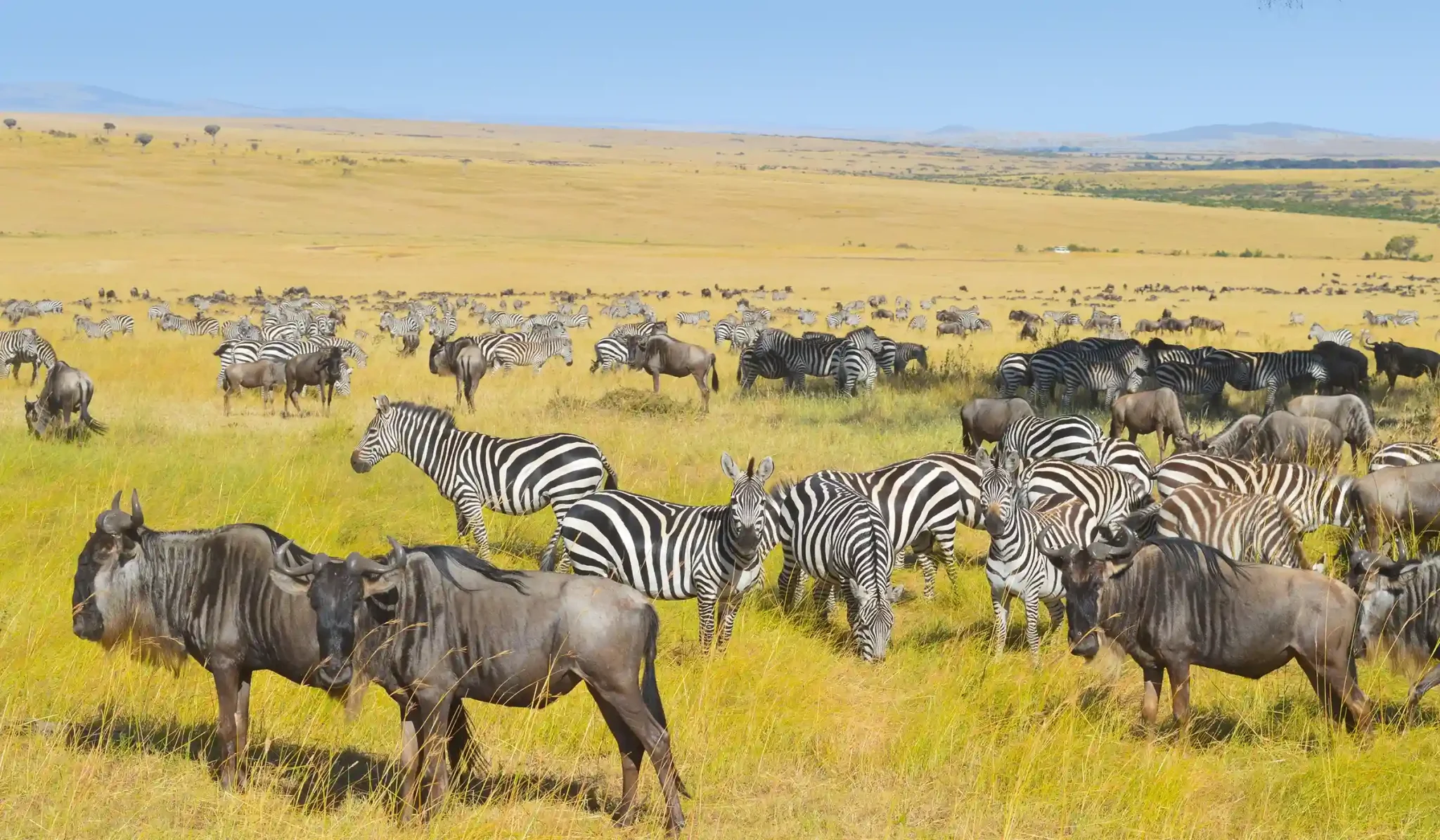
Most travellers picture a safari in the dry season, July to October, when the Great Migration crosses the Mara River. It is also the busiest and most expensive time of year. Many experienced travellers and guides prefer the months either side of it.
What is the shoulder season?
East Africa has two rainy seasons: the long rains, usually from late March to May, and the short rains, usually in November. The shoulder season is the time around them: June, November and early December, and January to March. The green season usually means the long rains themselves.
Rain here rarely means grey days of drizzle. More often it is a heavy afternoon or evening shower, followed by clear skies.
Five reasons to go
1. Lower prices
Lodges and camps cut their rates outside peak season, often by a large margin. On our 7-Day Off the Beaten Path, a party of six pays from $1,965 per person in April and May, against $2,855 in the peak months. The camps, parks and guide are the same.
2. Fewer vehicles
With fewer visitors, you are more likely to watch a leopard, lion or cheetah without other vehicles nearby.
3. Newborn animals
The rains bring fresh grass, and many animals give birth. Between January and March, the wildebeest calve in the southern Serengeti, and predators follow. Across the region, the green months are full of young impala, zebra and warthog.
4. Birdlife
From November to April, migrant birds arrive from Europe and Asia, and many resident species are in breeding colours. For birdwatchers, it is the best time of year.
5. Light and landscape
The dust settles, the plains turn green and the cloud and light suit photography. Many photographers choose the shoulder months for this reason.
What to be aware of
- Some roads become muddy after heavy rain, and journeys can take longer.
- A few camps close in April and May.
- Animals disperse when water is widespread, so sightings depend more on the experience of your guide.
- The Mara River crossings are not happening in the shoulder months.
When to go in the shoulder season
- January to March in Tanzania for the calving season in the southern Serengeti.
- June in Kenya for dry, clear days and the start of the migration, at shoulder prices.
- November and early December for green landscapes, quiet parks and a beach stay on the coast or in Zanzibar.
Our month-by-month migration guide shows where the herds are in each of these months.
Flexible on dates? Tell us your window, and we will show you the price difference between peak and shoulder weeks for the same trip.