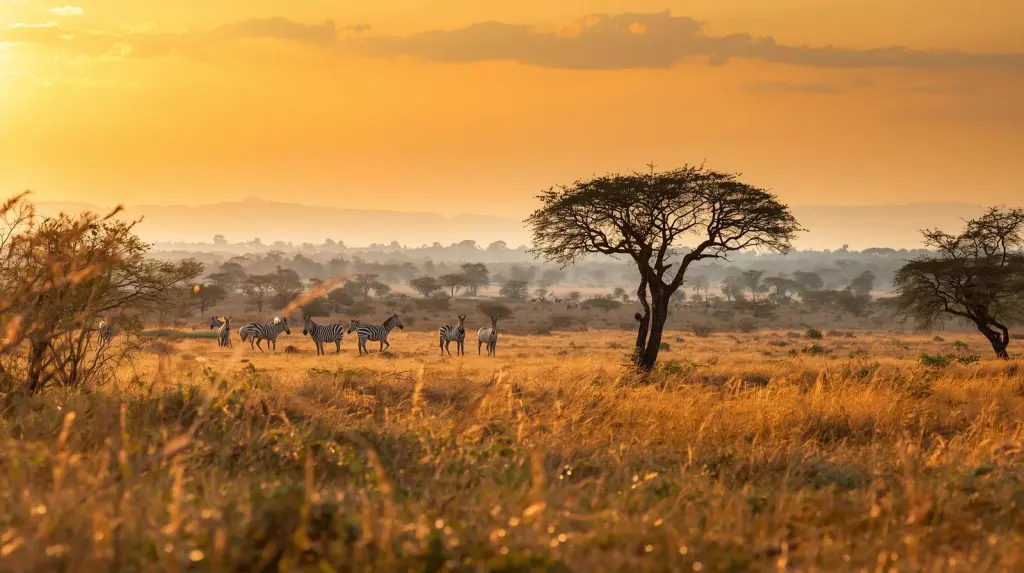

When is the best time to see the Great Migration? A month by month guide
Where the wildebeest are in every month of the year, when the Mara River crossings happen, and how to choose between Kenya and Tanzania for the Great Migration.
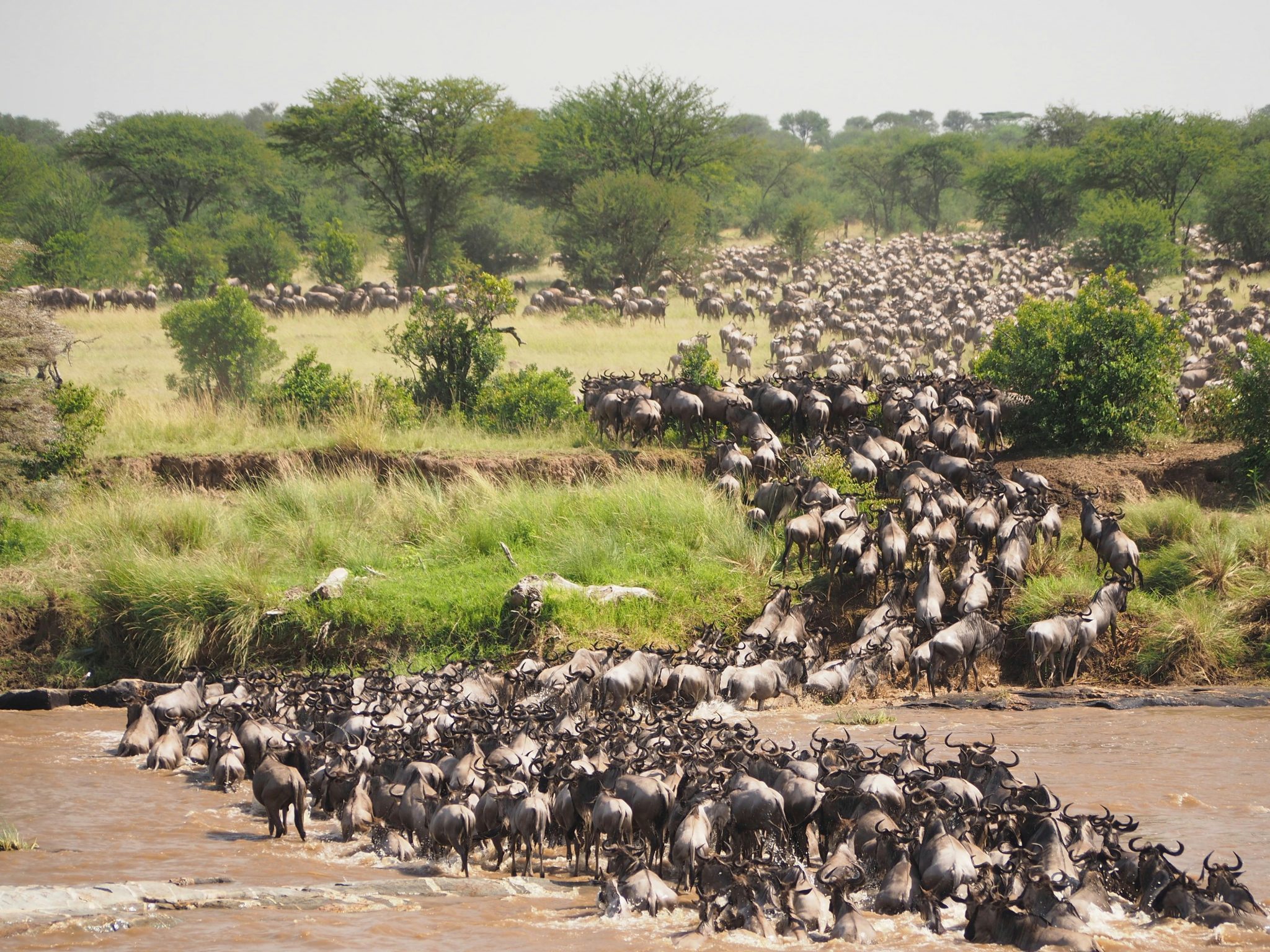
The Great Migration is not an event on a fixed date. It is a year round loop of around 1.5 million wildebeest, with hundreds of thousands of zebra and gazelle, following the rain and the fresh grass through Tanzania’s Serengeti and Kenya’s Maasai Mara. The herds are always somewhere. The question is where, and what they are doing when you arrive.
This guide walks through the year month by month, so you can match your dates to the part of the migration you most want to see.
The short answer
- River crossings: roughly July to October, in the Maasai Mara and the northern Serengeti.
- Calving season: roughly late January to March, in the southern Serengeti around Ndutu.
- Quieter, lower prices, still good game: June, November and early December.
These dates are approximate. The herds can arrive two weeks early or late depending on the rains, so a few flexible days and an experienced guide matter more than a fixed date.
January to March: calving in the southern Serengeti
After the short rains, the herds gather on the short grass plains of the southern Serengeti and the Ngorongoro Conservation Area, around Ndutu. Most calves are born within a few weeks, often in February, when thousands arrive each day. The young calves attract lion, cheetah and hyena, which hunt across the open plains, so this is one of the best times of year to see predators.
April and May: the long rains
The long rains arrive and the herds begin to move north and west. Some roads become muddy and a few camps close, but the landscape is at its greenest, the parks are quiet and rates drop to their lowest of the year. This season suits travellers who prefer fewer vehicles and lower prices.
June: the western corridor
The herds push into the Serengeti’s western corridor, towards the Grumeti River. The Grumeti crossings are smaller than those on the Mara River, but the river has large crocodiles and far fewer vehicles. June is also a shoulder month, so prices are often lower than in peak season.
July to October: the Mara River crossings
This is the period most people have in mind when they think of the migration. The herds reach the northern Serengeti and spill over into Kenya’s Maasai Mara, crossing the Mara River again and again as they chase fresh grazing. A crossing can take minutes or hours, and on some days there are several. On others there are none, because the herds gather on the bank and then turn back.
From the Kenyan side, the Maasai Mara is only a short flight or a day’s drive from Nairobi, and the conservancies on its borders offer the same wildlife with far fewer vehicles. From the Tanzanian side, camps in the northern Serengeti around Kogatende put you close to the crossing points.
November and December: the return south
The short rains begin and the herds stream back south through the eastern Serengeti towards the calving grounds. The herds move quickly, there are fewer visitors and rates fall. Early December is a good time to travel that many people overlook.
Kenya or Tanzania for the migration?
It depends on when you travel. From July to October, both work, and many travellers combine them. The Maasai Mara gives you easy access, excellent guiding and the option of a conservancy. The northern Serengeti is more remote and has fewer camps. From December to May, the migration is entirely in Tanzania, so the Serengeti is the answer.
How to plan it well
- Stay at least three nights in the migration area. Crossings are unpredictable, and time on the ground is what turns a chance into a sighting.
- Book early for July to September. Camps close to the crossing points often fill a year ahead.
- Choose your own vehicle. You decide how long to wait at a crossing point, not a group.
- Keep the rest of your trip flexible. The migration is only one part of a safari. Amboseli’s elephants, the Ngorongoro Crater and Lake Nakuru are all worth including.
Migration safaris
Volcan’s migration itineraries include the 7 Day Journey of the Wildebeest, the 10 Day Kenya and Tanzania Safari, and shorter trips such as the 3 Day Into the Wild Maasai Mara Safari. Each one can be adjusted to where the herds are expected on your dates.
Tell us your dates and we will tell you where the migration is likely to be and which itinerary suits those dates.