

Responsible travel
Tourism income helps protect East Africa’s parks and supports the communities around them. This page explains how we work to make sure that income does good.
Our four commitments
Responsible travel is not a separate product at Volcan. It is how every trip is planned and driven, and it rests on four things.
-
01
Wildlife and animal welfare
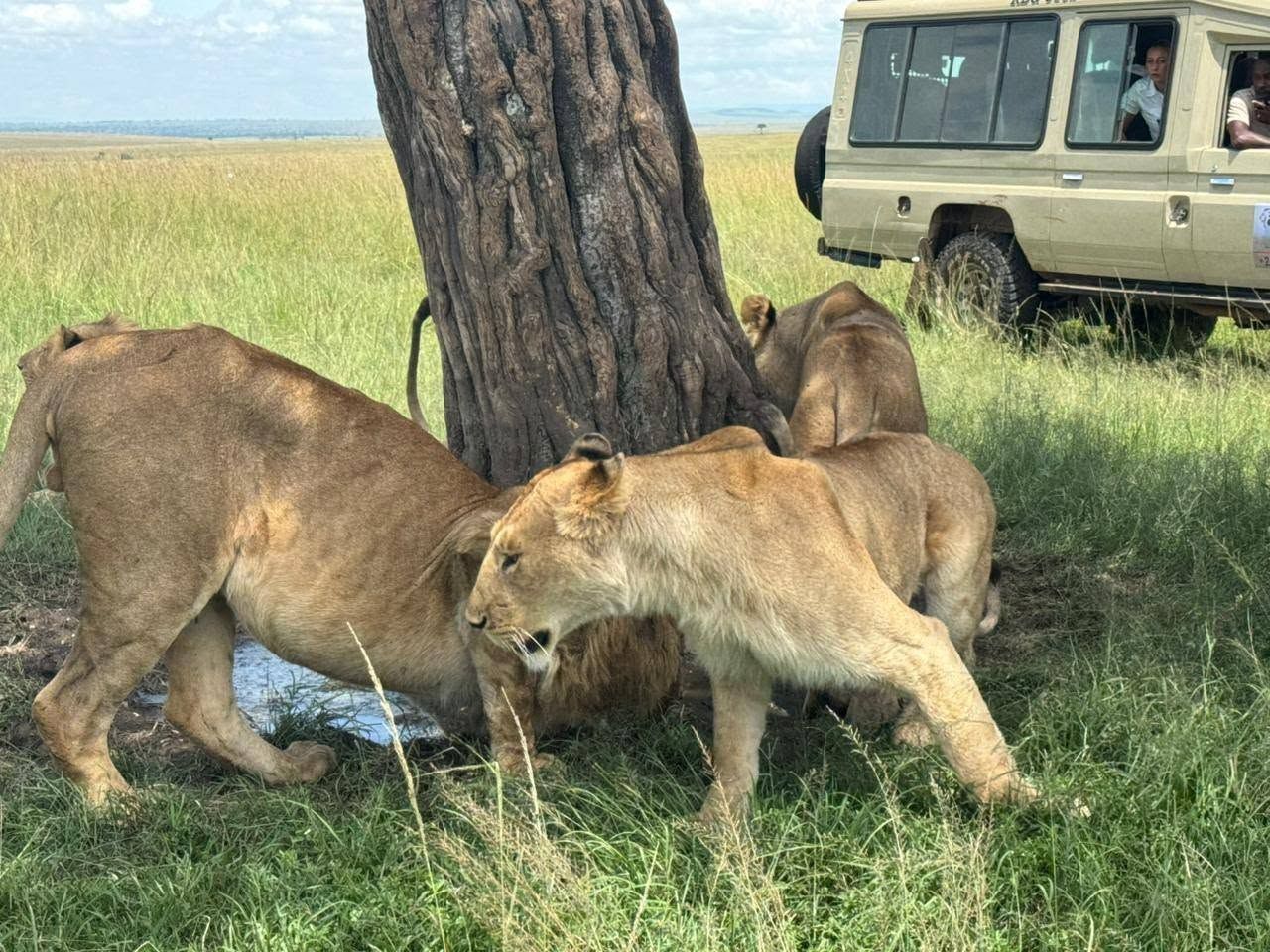
Every guide is trained in wildlife etiquette. Vehicles stay on the track, sightings are watched from a respectful distance, and there is no lure-feeding, ever. The animal decides how close the moment gets.
-
02
Community
Volcan favours camps and lodges with visible community involvement: conservancies in Laikipia and the Mara where the land is leased from Maasai communities, and lodges in Rwanda and Uganda whose staff come from the villages around the parks. Community visits, a school project in the Mara or a women’s cooperative on Lake Naivasha, are arranged properly, with the community’s consent and the contribution going directly to them.
-
03
Environment
Trips are low impact by design. Groups are small, usually one family or one group of friends, every vehicle carries reusable water bottles, and local produce is used wherever the lodges offer it.
-
04
Our people
The driver-guides are licensed professionals, most of them raised within a few hours of the parks they guide. The same Nairobi team handles a trip from the first message to the final day, and the business is run from Nairobi by its two directors.
How you can help
A few habits that protect the people and wildlife a safari depends on.
- Give through schools, clinics and community projects, never money, sweets or gifts handed to children directly.
- Ask before photographing anyone, and ask a parent or guardian before photographing a child.
- Volcan does not sell orphanage visits or volunteering with children, and asks travellers not to arrange them.
- Bring a refillable water bottle. Plastic bags are banned in Kenya, Tanzania, Uganda and Rwanda.
- Do not buy souvenirs made from ivory, skins, teeth, shells, coral or any protected species.
- Report any concern about a child to the guide, or call Childline Kenya on 116, free from any phone.
Our policies in full
Each policy below is available to travellers, travel agents and tour operators.
- Responsible tourism policy Download PDF
- Animal welfare policy Download PDF
- Child protection policy Download PDF
- Staff welfare policy Download PDF
- Health and safety policy Download PDF
- Supplier code of conduct Read online
Would you like to support a local project during your trip?
A community visit can be added to most itineraries, arranged with the community’s consent.
